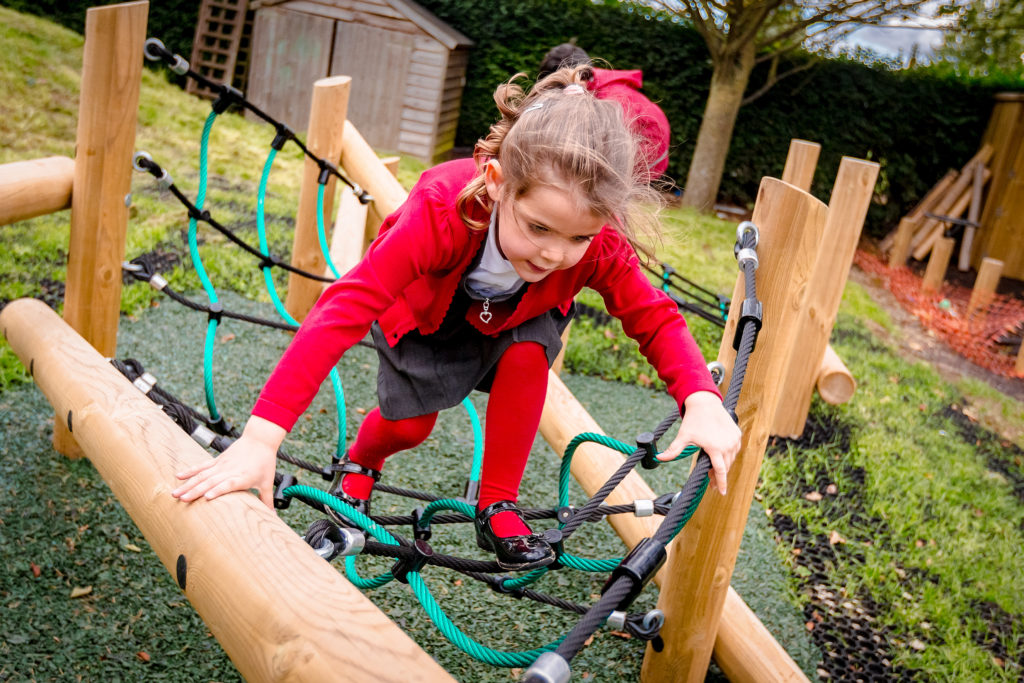
The Importance of Play for Childhood Development
Play is the language of childhood. It is how children learn, grow, connect, communicate and make sense of the world around them. From the earliest days of toddlerhood through to the teenage years, play shapes every aspect of a child’s development — physically, socially, emotionally and cognitively.
In today’s increasingly busy, screen-led world, the importance of play has never been more vital. At ESP PLAY, we have spent more than two decades designing and installing outstanding outdoor play environments across the UK, and we have seen first-hand the transformative impact that high-quality play opportunities can have on children’s lives.
This guide explores why play matters so much for childhood development, the different areas of growth that play supports, and how schools, communities, councils and housing developers can create play environments that genuinely make a difference.
Why Play Matters in Childhood
Play is far more than just fun. It is recognised by leading organisations including the United Nations, the World Health Organization, the NHS and the Department for Education as a fundamental right and a critical building block of healthy childhood development.
Through play, children:
- Build physical strength, balance, coordination and motor skills
- Develop language, communication and social skills
- Explore emotions, regulate behaviour and build confidence
- Solve problems, take risks and learn resilience
- Discover their interests, talents and identity
- Connect with friends, family and community
Without rich, regular opportunities for play, children miss out on essential developmental experiences that simply cannot be replicated through screens, classrooms or structured activities alone.
1. Physical Development Through Play
Active, outdoor play is one of the most powerful ways for children to develop physically — and one of the most enjoyable. Climbing, running, jumping, swinging, balancing and sliding all help to build:
- Gross motor skills and coordination
- Muscular strength, particularly in the chest, shoulders and core
- Cardiovascular fitness and endurance
- Balance, agility and spatial awareness
- Fine motor skills through gripping, grasping and manipulation
In an era when childhood obesity has been recognised as a national issue in the UK, daily access to physical play is more important than ever. Active play also lays the foundations for healthy lifestyles in adulthood, building a positive relationship with movement and exercise that lasts a lifetime.
2. Social and Emotional Development Through Play
Play is one of the most powerful tools for social and emotional development in childhood. Whether children are sharing a roundabout, building a den together, queueing for the slide or negotiating roles in imaginative play, they are constantly learning how to communicate, collaborate, share, take turns and resolve conflict.
Through play, children develop:
- Empathy and understanding of others
- Cooperation, teamwork and leadership
- Confidence, self-esteem and resilience
- Emotional regulation and self-awareness
- Friendships and a sense of belonging
Play environments that encourage group play, role play and shared experiences are particularly powerful — supporting children to grow into confident, kind and emotionally healthy young people.
3. Cognitive Development Through Play
Play is the original classroom. Long before children can read, write or follow formal lessons, they are learning through play — testing ideas, solving problems, exploring cause and effect, and making sense of the world.
Cognitive development through play includes:
- Problem-solving and critical thinking
- Early mathematical concepts such as size, shape, number and pattern
- Early scientific thinking through cause and effect, experimentation and discovery
- Language and vocabulary development through conversation and storytelling
- Memory, attention and concentration
Open-ended play environments — including natural play features, water play, mud kitchens, sand pits, role-play units and construction zones — are particularly valuable for cognitive development, as they encourage children to think creatively and independently.
4. Communication and Language Development Through Play
Play and language go hand in hand. Through play, children are constantly speaking, listening, describing, narrating, asking and answering — building the foundations of communication that will serve them throughout life.
Whether they’re chatting with a friend on a swing, organising a role-play game, leading a group adventure or simply sharing their experience with a parent or teacher, play creates endless authentic reasons to communicate. This is one of the reasons high-quality outdoor play environments are so important — they provide a rich, dynamic context for natural language development that classrooms alone cannot match.
5. Creativity and Imagination Through Play
Imaginative play is one of the most magical and important aspects of childhood. Through role play, storytelling, pretend adventures and creative exploration, children develop:
- Creativity and original thinking
- Confidence to express themselves
- Empathy through stepping into other roles
- Narrative thinking and early literacy skills
- A lifelong love of imagination and discovery
ESP PLAY designs play areas that intentionally support imaginative play — with themed units, role-play features, natural play zones and open-ended landscapes that invite children to create their own stories every day.
6. Inclusive Play — Every Child, Every Ability
A truly outstanding play environment is one that includes every child. Inclusive play is fundamental to healthy childhood development for all children — not only those with additional needs.
When children of all abilities play together, they learn empathy, kindness and acceptance. They build friendships that cross ability lines. And they develop a deeper understanding of the diverse world around them.
ESP PLAY is a recognised specialist in inclusive play design, integrating features such as wheelchair-accessible roundabouts, inclusive swings, sensory pathways, accessible surfacing and sensory-rich play panels into our schemes. The result is a play environment where every child can play, belong and thrive together.
7. The Benefits of Outdoor Play
Outdoor play offers benefits that simply cannot be replicated indoors. Fresh air, natural light, connection with nature, large-scale movement, weather variation and sensory richness all combine to create an environment where children are at their most engaged, healthy and happy.
Regular outdoor play supports:
- Vitamin D production and overall physical health
- Mental wellbeing, reduced anxiety and improved mood
- Better sleep, focus and behaviour
- A lifelong connection with nature
- Reduced reliance on screens and digital entertainment
This is why ESP PLAY is so passionate about creating outstanding outdoor play environments — they make a measurable difference to children’s lives.
Creating Play Environments That Make a Difference
For schools, councils, parish councils, housing developers and community groups, investing in high-quality play environments is one of the most powerful ways to support childhood development at scale. The best play environments are:
- Inclusive — designed for children of every age and ability
- Inspiring — sparking curiosity, imagination and adventure
- Active — supporting physical development through varied movement
- Open-ended — inviting creative, child-led play
- Beautifully designed — natural, welcoming and built to last
- Compliant and safe — meeting all relevant safety standards
- Long lasting — engineered to deliver play value for many years
ESP PLAY brings all of these principles together in every play area we design and install — from EYFS outdoor provisions in primary schools to LAPs, LEAPs and NEAPs on housing developments, MUGAs for community sport, and inspiring inclusive schemes for parks, leisure venues and SEN settings.
ESP PLAY — Champions of Play with Purpose
At ESP PLAY, we believe in play with purpose. Every play area we design and install is built around a simple but powerful belief: play matters. Play shapes childhood. Play shapes futures. And every child deserves access to high-quality, inspiring, inclusive play opportunities — no matter where they live or learn.
Whether we are working with a national housebuilder, a primary school, a multi-academy trust, a parish council, a local authority, a leisure operator or a community group, our specialist in-house team brings the same passion, expertise and creativity to every project. From initial concept through to manufacture, installation, compliance and aftercare, ESP PLAY delivers play environments that genuinely make a difference.
The Importance of Play — Today and Every Day
In a world that is changing faster than ever, play remains one of the most powerful, timeless tools for healthy childhood development. By prioritising play — in schools, in homes, in communities and in new developments — we give children the best possible foundation for a happy, healthy and successful future.
ESP PLAY is proud to play a part in that mission, every single day.
Get in touch with ESP PLAY today to find out more about how we can help you create an outstanding play environment that supports childhood development, brings communities together and stands the test of time.