8 Things To Consider When Renovating a School Playground
All school playgrounds eventually need to undergo renovation. However, when they do, it is important to think carefully about the changes you want to make. A good playground will provide children with opportunities to engage in physical activity, socialise with their peers and develop essential skills. With the right design and equipment, it can also promote learning, improve academic performance and even enhance overall wellbeing. To help you make more informed choices, here, are the eight most important things schools should consider when renovating their playground.
- Safety
The safety of pupils and staff should always be the top priority when renovating a school playground. It is crucial to ensure that the playground is free from hazards, such as sharp edges, tripping hazards, entrapment points and other potential dangers. In the UK, all playgrounds have to comply with the EN 1176 safety standards and to ensure this, renovation work should be carried out by a professional playground installation company. To maintain compliance over the long term, a full inspection of all playground equipment and surfacing should be carried out annually by a qualified RPII inspector.
- Age-appropriate design
A playground’s design and the equipment which is installed should meet the needs of the children who will be using it. Age-appropriate design is essential to ensure that children are engaged and challenged while also being safe. A well-designed playground should have equipment that is appropriate for all the different age groups that the school caters for, for example, reception, infant and junior aged pupils.
- Accessibility and inclusivity
Not only should a playground cater for the needs of different age ranges, it should also be accessible to all, including those with disabilities or special needs. When renovating, the design should ensure that the playground has accessible entry points, ramps and surfacing so that children with disabilities and SEND can easily navigate the space.
Being able to access the playground doesn’t always mean children have opportunities to be included. To ensure a playground is inclusive, the range of activities and equipment available should offer something for everyone.
- Durability
Playground equipment should be durable and be able to withstand both heavy use and the worst of the British weather. The materials used should be of high quality and designed to last for years. Indeed, it can often be a false economy to buy cheap surfacing and equipment as it would require more maintenance over its life span and would need replacing sooner.
- Shade and shelter
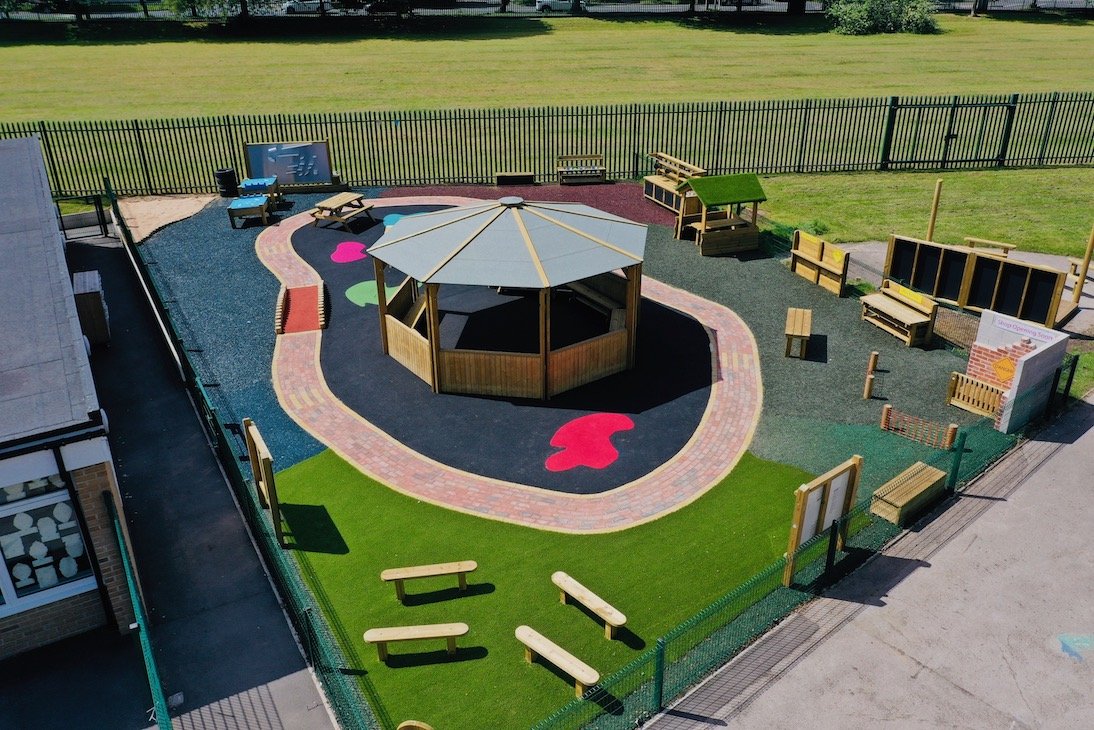
Shade and shelter are essential considerations for the modern playground. We are more aware than ever of the long-term risks of exposure to the sun and how quickly children can get sunburnt in the summer months. Sunshades, shelters and play huts can protect children from the sun and provide a comfortable environment for play. Shelters also help protect against wind and rain, and some of the larger ones available today can also double up as outdoor classrooms.
- Green spaces
Green spaces are beneficial for children’s development and wellbeing. For those with anxiety or ASD, they can also be places of refuge in an otherwise hectic outdoor space. A well-designed playground should incorporate green spaces such as grassy areas, trees and plants. These areas can provide opportunities for nature exploration, outdoor learning and relaxation. If a school lacks a natural green space, it is possible to create one using planters, trellises and even artificial grass.
- Activity zones
If children are to get the most benefit from their playground, they need plenty of things to engage them. Today, playgrounds are designed to incorporate different activity zones, each focusing on a different type of activity. By creating zones, schools can offer a wider variety of activities and prevent one activity from disrupting another or potentially becoming a hazard. Typical activity sones include those for climbing, creativity, sitting and eating, creative activities and messy play. Many playgrounds now also incorporate an outdoor learning zone.
- Budget
Renovating a playground can be expensive, so schools should have a realistic budget in mind. The budget should include all costs associated with the renovation, such as surfacing, equipment, installation, maintenance and landscaping.
To help cover the costs of playground renovation, many schools carry out fundraising activities, often with the help of parent and teacher associations. There are also some grants you can apply for and there is often help available from local businesses.
Conclusion
Renovating a school playground is an investment in the physical, social and cognitive development of children. When planning a renovation, schools should consider the points above in order to ensure that their new playground is affordable, meets the needs of their pupils, complies with safety regulations and will last the test of time.
ESP Play not only supplies and installs playground surfacing and equipment; we also help you design your playground to meet your needs. For more information, visit our Products page or find out about our Free Playground Design Service.