St Mary’s Catholic Primary Academy, Wolverhampton


Transforming Early Years Outdoor Learning at St Mary’s Catholic Primary Academy, Wolverhampton
Location: Wolverhampton
Project Overview
At St Mary’s Catholic Primary Academy, the ambition was to create inspiring, functional and inclusive outdoor environments for both Nursery and Reception children that would foster physical development and communication and language skills across all areas of learning.
In the Nursery area , the space had long suffered from poor drainage due to a lack of subbase beneath the artificial grass. The area lacked structure and play value and while the existing canopy provided some shelter, the team knew it could be vastly improved. The Reception area told a similar story, with lifting wetpour surfacing, worn-out equipment and an uninspiring layout that required staff to constantly reposition movable items. Additionally, the school wanted to create a stronger, more secure connection between the two spaces, with clear boundaries and safe pathways, all while making the most of existing features like the large tree in the Nursery.
Challenge
The Nursery area was suffering from major drainage issues, caused by the original artificial grass having no proper subbase beneath. The space lacked structure and usable features and the large central tree posed a safety issue with no protection or usable area around it. It didn’t offer the purposeful, engaging play environment that staff wanted.
Reception faced its own challenges. The surfacing was in poor condition, the equipment was old and often unfixed and staff spent too much time moving items around each day. The area lacked clear zones, imaginative features, and consistency. Importantly, staff also wanted to keep the colourful mural on the back wall as a familiar visual anchor, even as the rest of the area underwent a complete transformation.
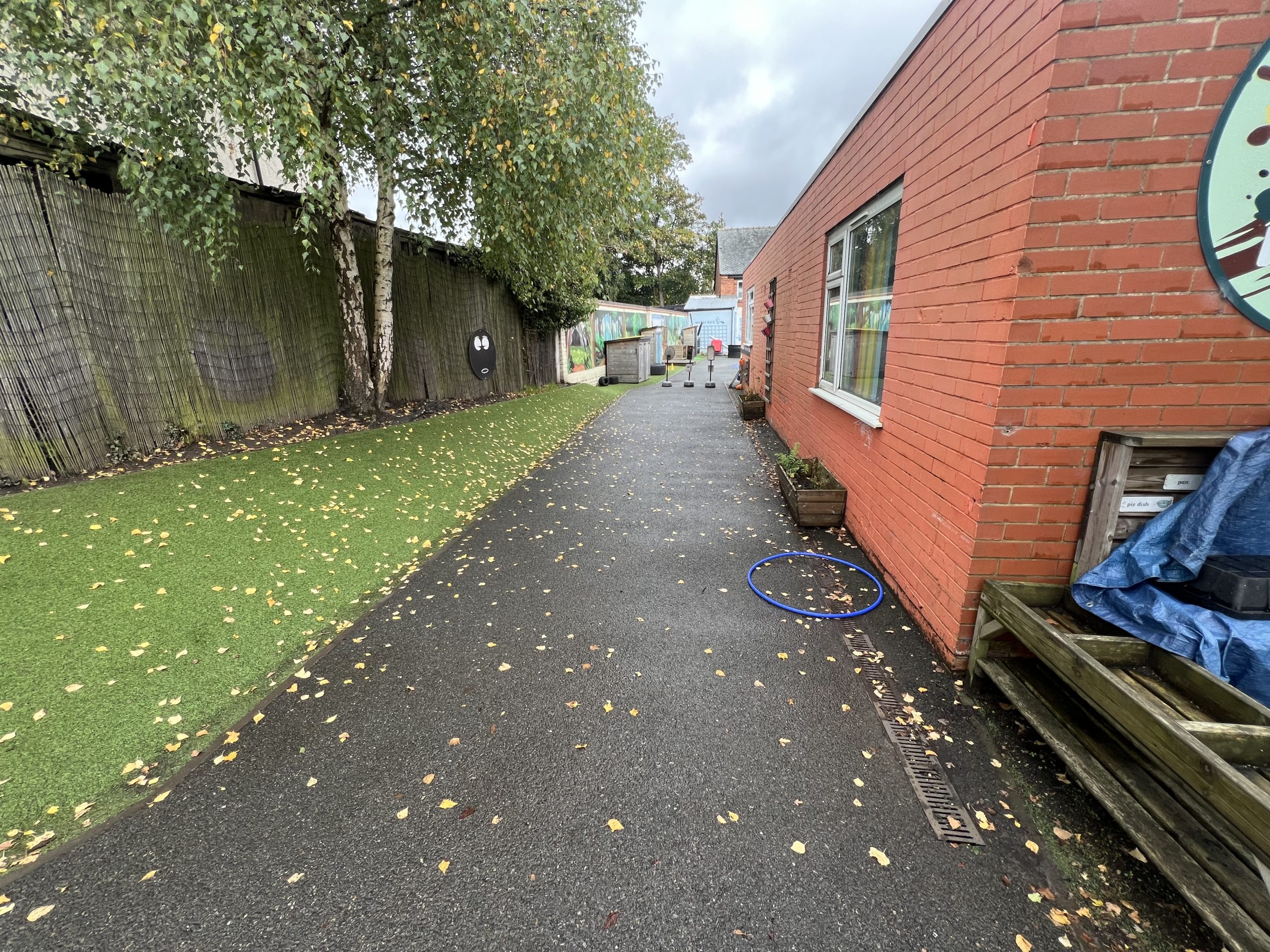
Between the two, the shared pathway was underused. It lacked visual or play value and needed to become a space that children from both Nursery and Reception could enjoy and learn in together.
A major focus of the redesign was on developing physical skills and supporting communication and language development. However, this wasn’t about installing traditional climbing frames. The team wanted to encourage children to explore movement through grip strength, water pumping, block play, roleplay and more open-ended, sensory-based experiences. The tree in the Nursery area needed to be made safe and incorporated as a feature, rather than a problem to work around. The fencing and boundaries also needed rethinking, with a fixed gate into Nursery and a more flexible solution for separating off the bike area in Reception.
Approach
Our approach began with careful consultation and design development, focused on creating a seamless flow between the two settings while meeting the developmental needs of each age group.
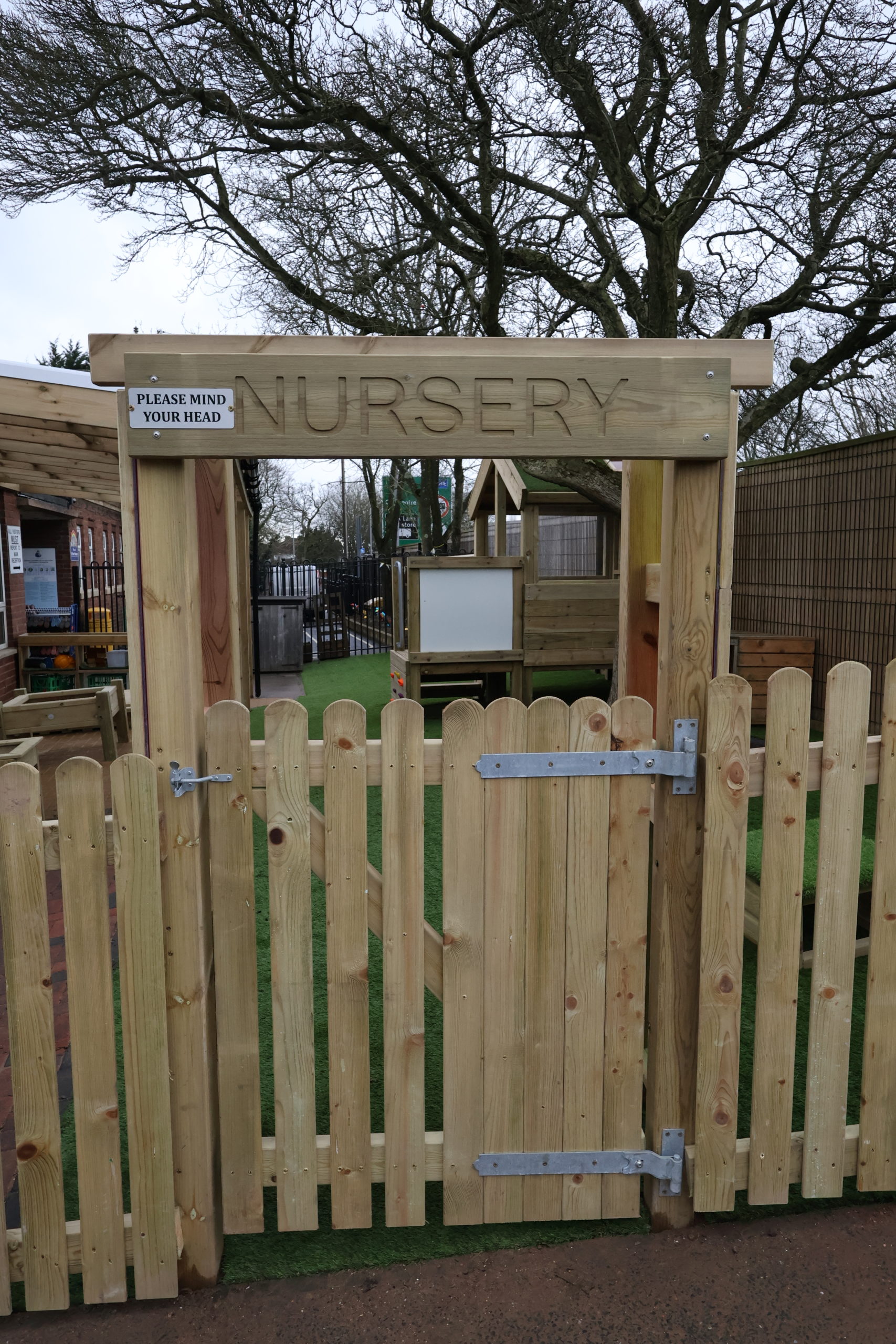
In the Nursery area, we stripped back the artificial grass and laid a new, solid subbase to solve the long-standing drainage issue. We installed a mix of block paving, resin-bound gravel, and artificial grass to offer a variety of textures and functional zones. A carved sensory archway at the entrance gives the space its own identity and provides a warm, welcoming transition point for children.
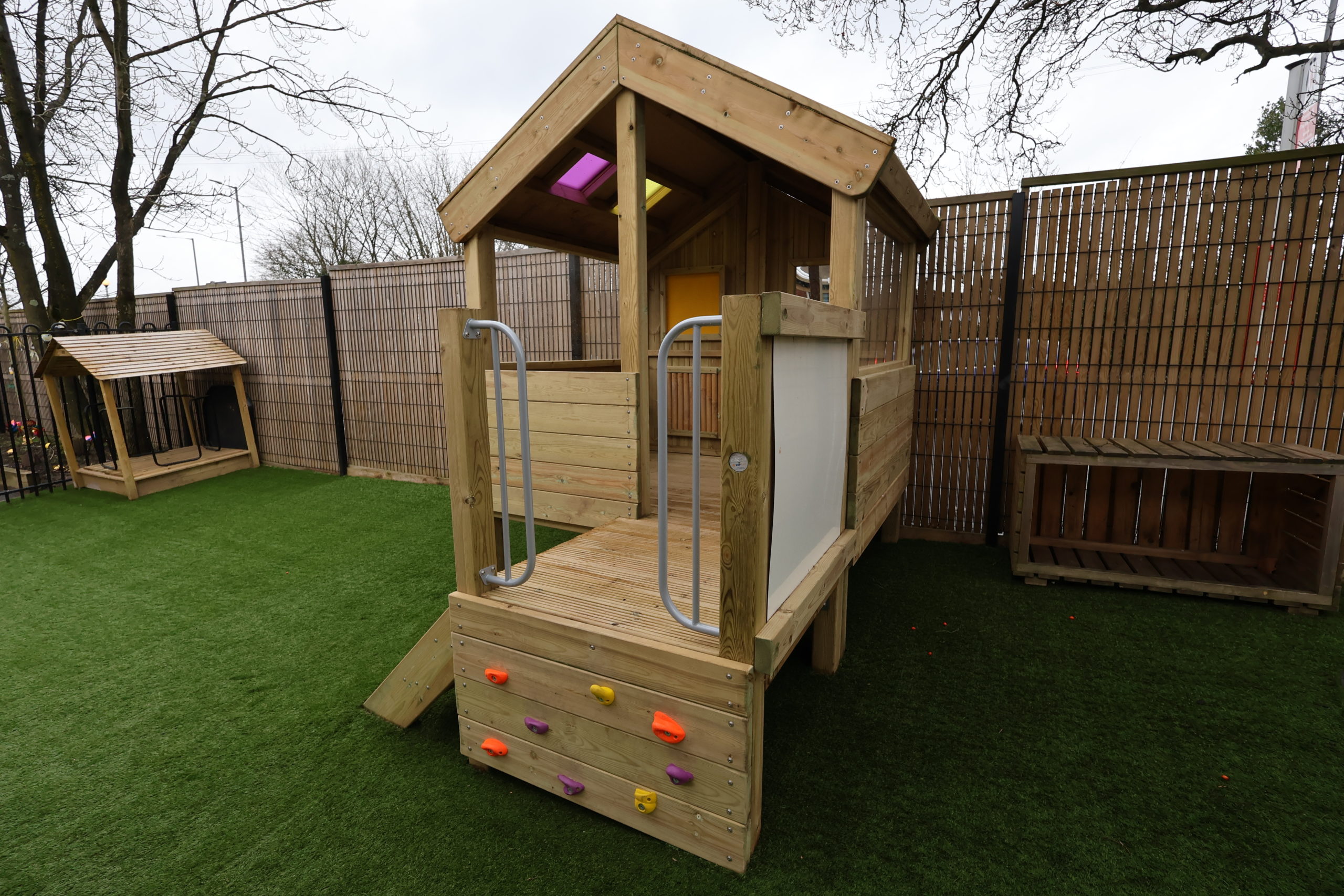
To encourage physical activity and communication, we created a bespoke sensory climbing hut that invites roleplay, social interaction, and exploration. Around the tree, we added a mulch safety surface to transform it from a trip hazard into a central feature — creating a calm and shaded area ideal for group time or quiet play. Additional features include a mud kitchen with integrated storage, a raised sandbox stage for performance and sensory play, and a water play table designed for simple, open-ended use appropriate to Nursery-age children.
A bespoke sensory climbing hut was introduced, designed not only for physical activity but also for imaginative play and language-rich interaction. The tree, once a design obstacle, became a central feature, surrounded by mulch to provide a safe, shaded gathering point. We also installed a water table with a hand pump to develop fine motor skills and cause-and-effect learning, a new mud kitchen with dedicated storage, a sandbox performance stage, and open-ended resources that encourage movement, expression, and social play.
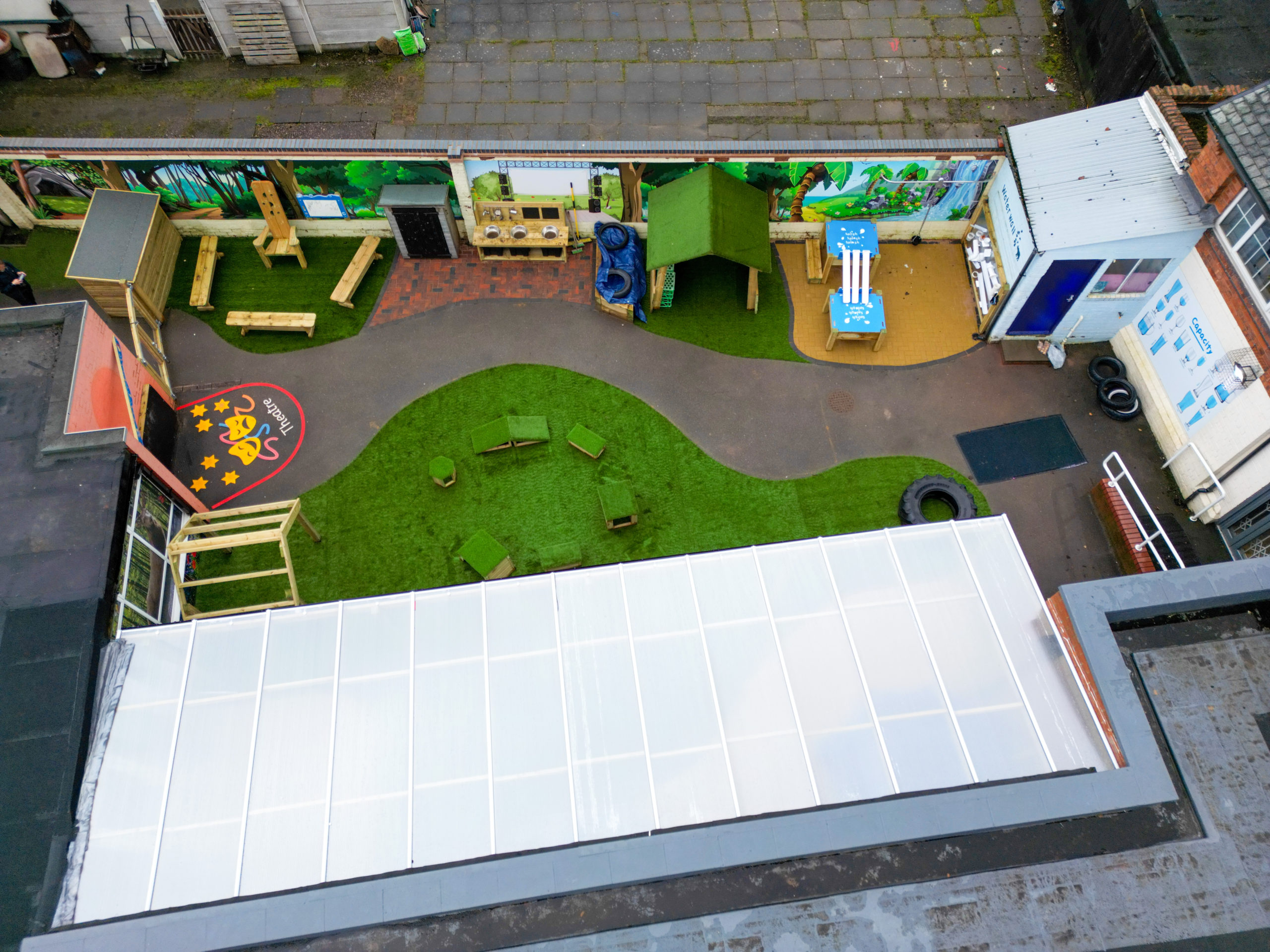
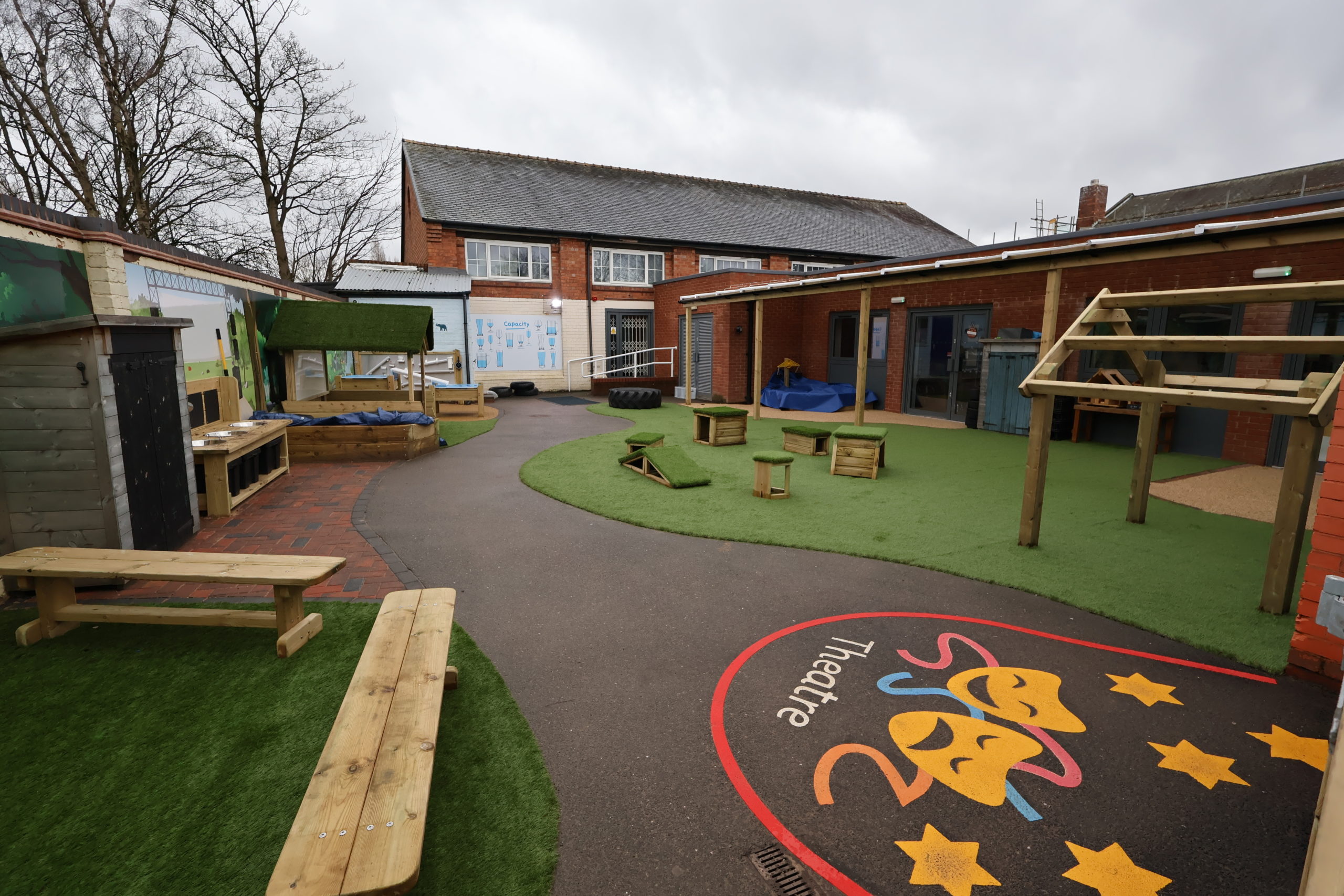
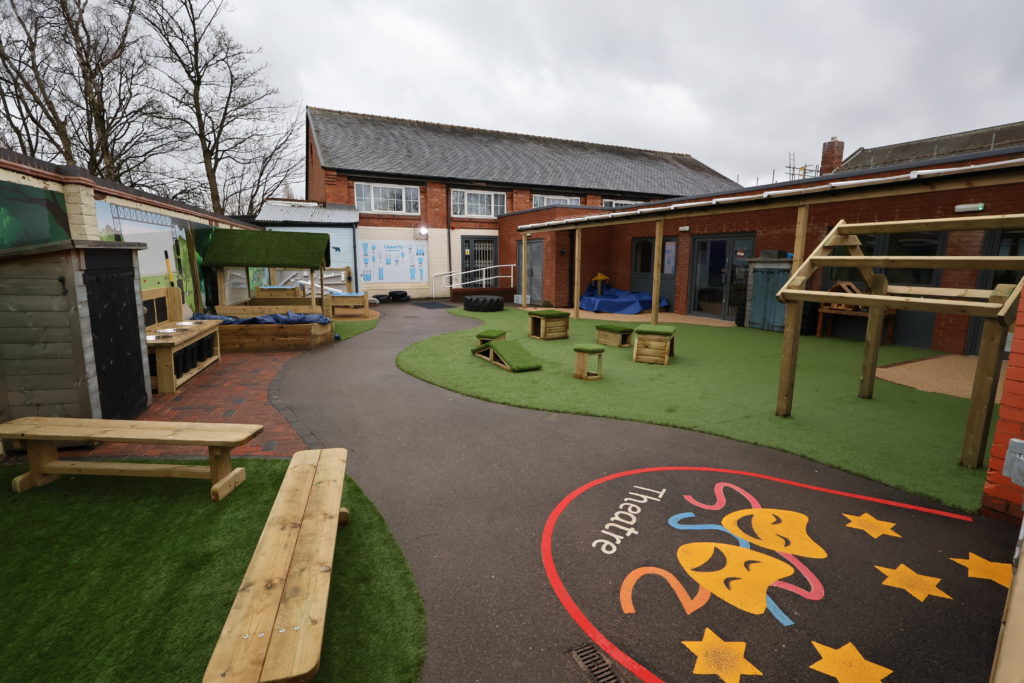
Over in Reception, the transformation was equally dramatic. We removed the failing wetpour and resurfaced the area with artificial grass and block paving, giving it a clean, fresh look and long-lasting durability. The old canopy was replaced with a timber framed canopy with a polycarbonate roof, providing shelter and a natural aesthetic. We created purposeful zones including a performance and storytelling area, a mud kitchen and mud box, a water play area featuring a hand pump, and a freestanding open-ended block set designed to be rearranged by the children. A sandpit with integrated pulley system and weighing scales encourages collaborative thinking and physical interaction, while an open-ended house frame offers a blank canvas for imaginative construction and dramatic play.
To improve functionality and safety, we introduced a new gate for clear sightlines and supervision, and created a flexible fencing solution to separate the bike area while allowing staff to adapt the layout as needed.
Between the two spaces, the connecting roadway was resurfaced with a new subbase and artificial grass, transforming it from a tired cut-through into an active learning space. Road markings now support physical movement, coordination and imaginative roleplay, and the new access points create a seamless flow between Reception and Nursery.
Results & Impact
The result is a pair of completely transformed outdoor environments that now function as extensions of the classroom. In the Nursery, the new surfaces and fixed structures give the space lasting value and practical function. The tree has become a natural centrepiece, offering shelter and imaginative play opportunities rather than being a hazard. The area now supports the kind of language-rich, movement-driven play that children need at this stage of development.
In Reception, the layout has introduced purposeful zones that staff can rely on day after day, with fewer movable parts and more time for focused teaching. The inclusion of the hand pump adds a new level of physical challenge and discovery, offering a sense of progression for children as they transition from Nursery.
The new roadway connection is already being used across age groups, supporting gross motor play, transport-themed learning and a smooth flow between the two spaces. Staff have reported calmer, more engaged children and much easier management of the outdoor areas overall.
Client Feedback
“We are absolutely delighted with our new, transformed outdoor areas. The look on the children’s faces when they came back after half term was just priceless. They were amazed and couldn’t wait to explore. The whole team is so pleased with the quality of the work and the attention to detail.
We’ve been delighted with the service received from ESP throughout the entire process. Everything has been smooth, professional and collaborative from start to finish. We would happily work with ESP again in the future and wouldn’t hesitate to recommend them to other schools.”
Conclusion
This project is a powerful example of how thoughtful design, collaborative planning and high-quality installation can completely reimagine early years outdoor spaces. By addressing issues like drainage, safety, and layout and layering in open-ended, sensory-rich play opportunities we’ve helped St Mary’s create environments that genuinely support the developmental needs of young children.
From the carved sensory entrance to the bespoke water play and performance zones, every element has been designed with purpose and play in mind. The result is not only a set of beautiful, functional spaces, but also a clear boost to children’s confidence, creativity and communication.
At ESP Play, we believe that every child deserves a space that inspires them to move, talk, build, and imagine. And every educator deserves an outdoor environment that supports their vision. This project is a proud example of what can be achieved when design and learning come together.
Play Area Before Installation
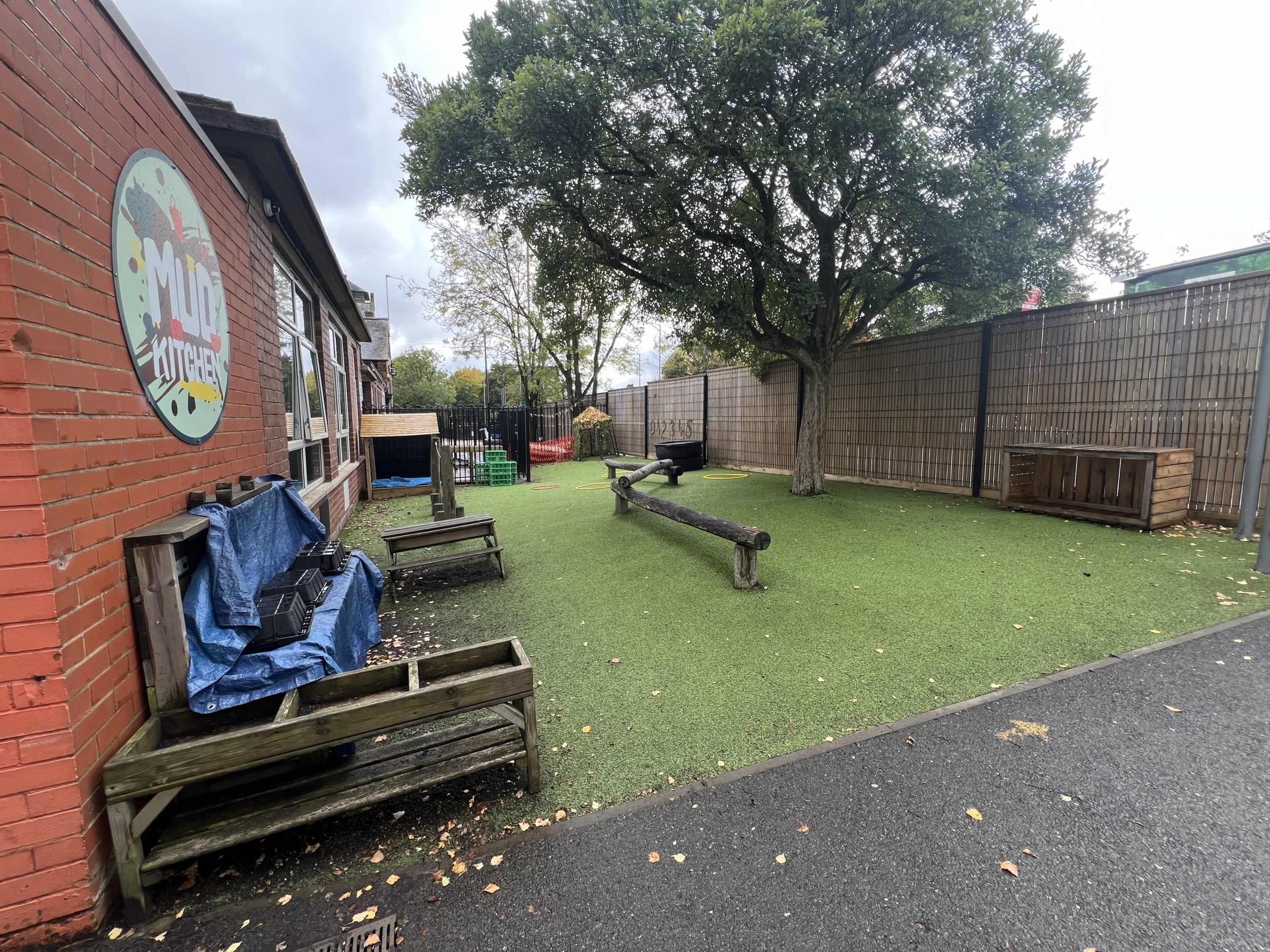
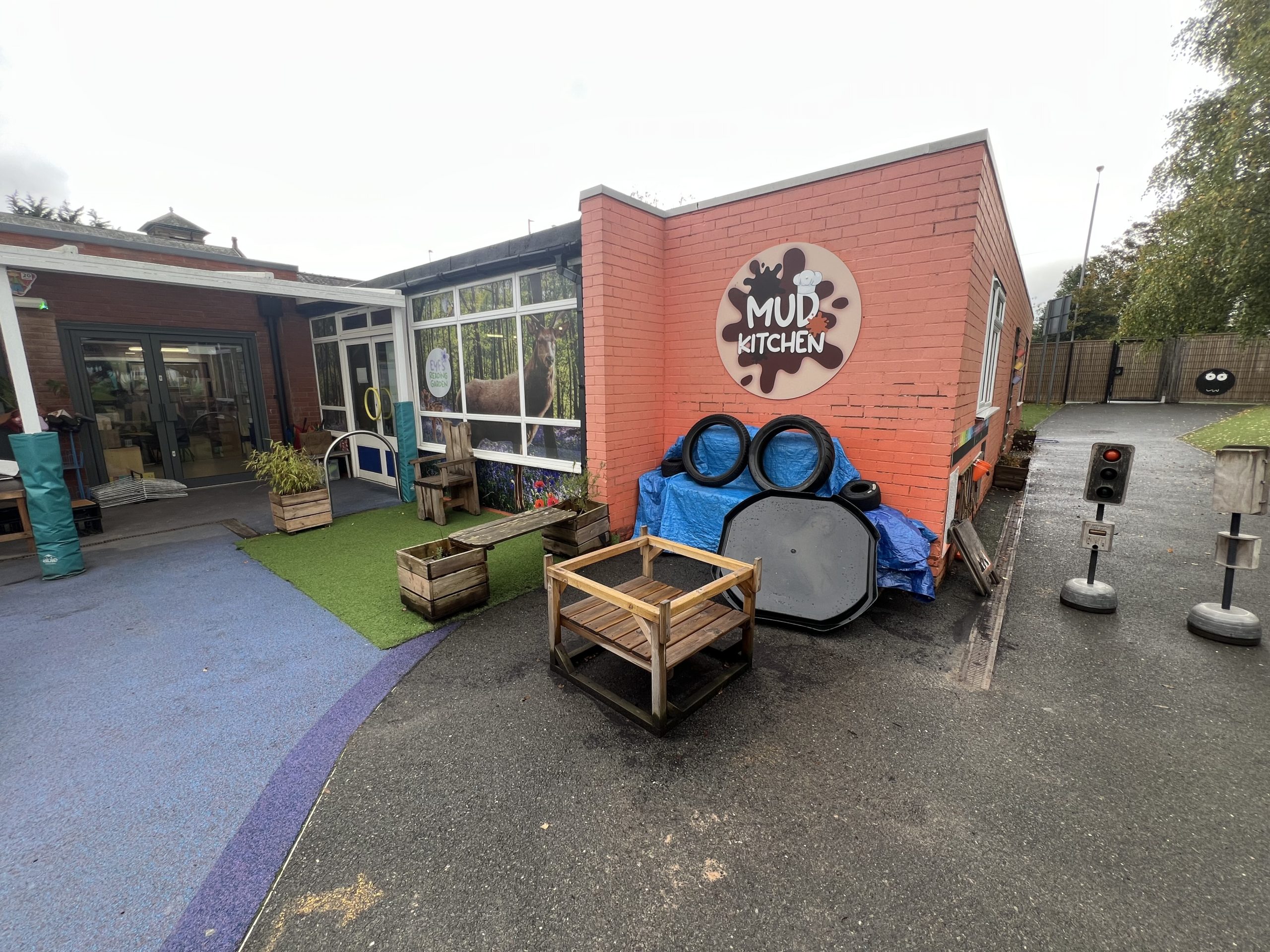
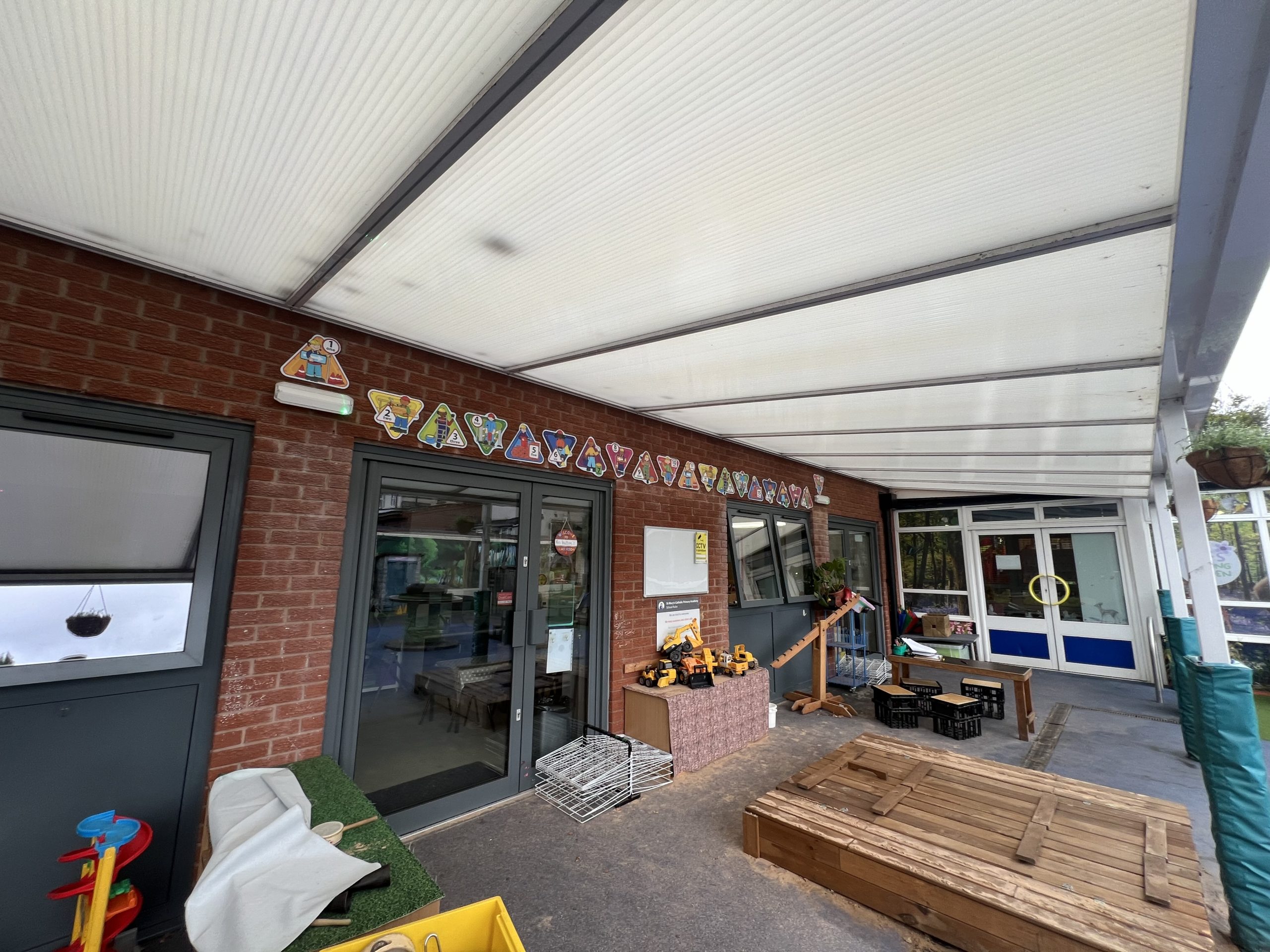
Play Area After Design and Installation