All-Weather Playground Surfacing Ideas for Schools
The months from December to March can be a pretty dismal time for playground activities. Winter brings with it the prospect of freezing cold temperatures, icy winds and heavy rains, while playground surfaces can form into ice rinks and grassed areas turn rock-solid or become quagmires. It’s the time of the year when parts of the playground become no-go areas and the indoor break bell is met with groans from staff and students alike. And while there’s absolutely nothing you can do to alter the weather, there are ways to make your school playground more accessible and inviting. Here are some of the best all-weather playground surfacing ideas for schools.
All-weather playground surfacing
Having the right playground surfacing for winter weather is essential for both accessibility and health and safety. Traditional hard surfaces, like asphalt or tarmac, can become dangerous. If they do not drain properly, rainwater stays on the surface making it slippery. If the water freezes or snow is trodden to ice, it can be even more treacherous. These things put many children off playing and for those that do, there is an increased risk of injury if someone falls.
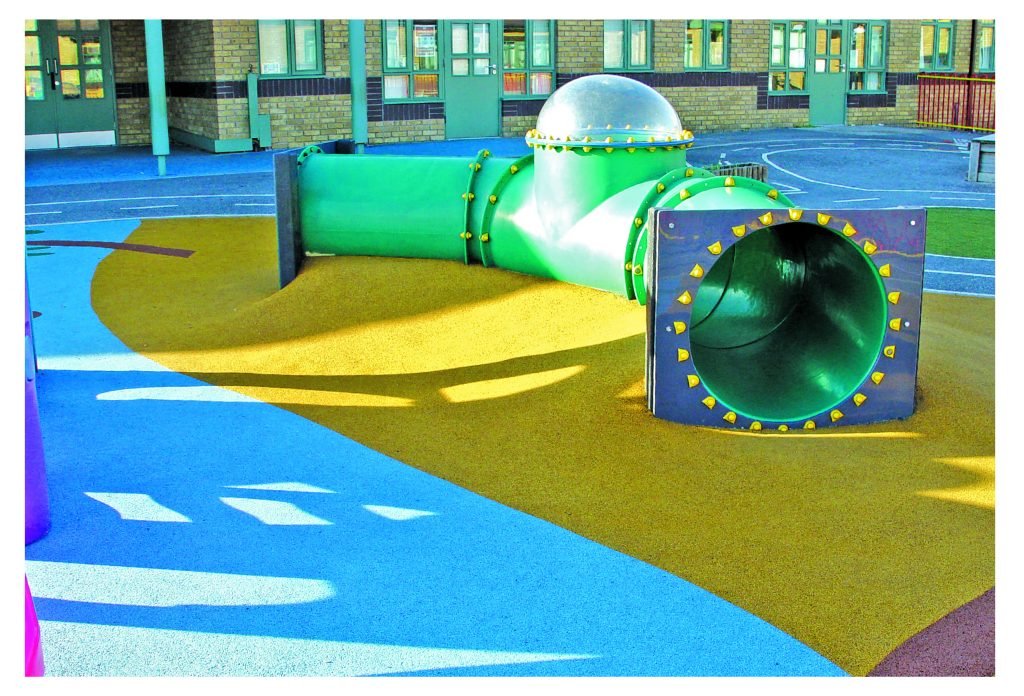
A better all-weather surfacing solution is wetpour surfacing. Now highly popular in schools across the UK, it is a free-draining surface composed of recycled rubber granules which are resin-bonded together to create a firm but cushioned layer. Being made from rubber, it has a much better grip on children’s shoes and if they do fall, the cushioning reduces the risk of injury and fractures.
Two alternatives to wetpour are resin-bound rubber mulch and resin-bound gravel. Rubber mulch has similar qualities to wetpour and offers similar cushioned protection. Resin-bound gravel, meanwhile, is a harder surface, more akin to tarmac and asphalt, but longer lasting and more suited to all weather conditions. Being fully permeable, it has improved drainage, helping prevent puddles from forming. Wetpour and resin-bound gravel are available in different colours and are suitable for use with playground markings.
All-weather grass and sports surfacing
If your school has grassed areas for playing, sitting or PE, winter weather can make them unusable. Water that permeates into the soil beneath can freeze, making it hard and slippery, or it can turn into equally slippery mud that then gets everywhere in school.
The three solutions for these problems come in the form of grass matting, artificial grass and sports surfacing. Grass matting is an option for those that want to maintain a green area with real grass. Essentially, this is a layer of protective meshed rubber that is laid just under the surface of the soil. It remains invisible to the eye, but the mesh network protects the grass from being worn away in wet conditions and prevents the wet soil from turning into a muddy slush. Although children won’t want to sit on it when it’s wet, it can be played on safely in all weathers.
A practical alternative to real grass is artificial grass. With a protective cushioned layer beneath, it offers a safe surface to land on, but unlike lawned areas never gets muddy. It also drains exceptionally well, making it ideal to play on, no matter how wet it is. Of course, it also comes with the added benefits of never needing to be mowed, watered or reseeded, saving you time and money when it comes to maintenance.
Artificial grass sports surfacing offers similar attributes to standard playground artificial grass, in that it is firm but cushioned, self-draining and doesn’t need regular mowing, watering or reseeding. The key difference is that it is specially designed as a surface on which to play sports and create pitches. It comes in a range of pile heights to suit different uses and can be overlaid with multiple sports markings, allowing you to deliver the outdoor PE curriculum all the way through the year and even bring in income from letting it out to other sports teams in the evenings and at weekends.
All-weather pathways
In poor weather, schools need to ensure that pupils and staff get from A to B safely. People will need to avoid slippery or muddy areas and travel in the same direction, while those with mobility problems or who use wheelchairs will need a clearly laid out pathway that is accessible for them to use.
One of the best ways to provide these things is to create pathways using block paving. Made from hard and sturdy bricks, it provides a firm foundation that comes with a natural grip for shoes and tyres and offers good drainage. It can be used to create clearly visible pathways that offer clear routes across your playground and can be formed into ramps to provide easy access for those in wheelchairs. As a result, it offers safe ways for everyone to travel around the playground all year round.
Conclusion
Winter weather can make a playground uninviting and potentially hazardous. However, with the right surfacing in place, it is possible to create a space that is usable all year round and which minimises the risk of injury.
For more information, visit our Surfacing page.